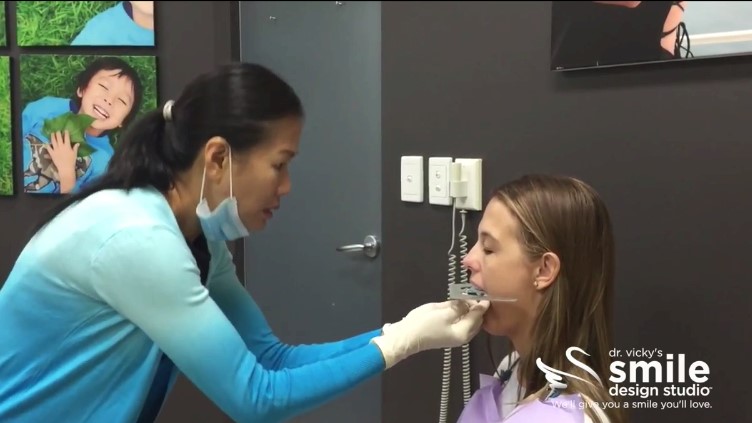
Porcelain veneers are one option for changing selected aspects of the appearance of teeth. They may be considered for concerns involving tooth colour, shape, wear, small chips or minor spacing.
Veneers are not suitable or necessary for everyone. Treatment commonly requires some removal of natural tooth structure, is generally irreversible and creates an ongoing need to maintain or replace the restorations.
Before deciding whether to proceed, you should understand the proposed treatment, its limitations, the available alternatives and the risks relevant to your circumstances.
What are porcelain veneers?
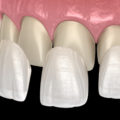
Porcelain veneers are thin, custom-made ceramic restorations bonded to the front surfaces of teeth.
Their colour, shape, surface texture and translucency can be planned to complement the surrounding teeth and the patient’s preferences. However, the final appearance is influenced by several factors, including:
- The underlying tooth colour
- The amount of available enamel
- The thickness and type of ceramic
- The shape and position of the teeth
- The condition of the gums
- The colour of adjacent teeth and restorations
- The bonding materials used
- How the ceramic responds under different lighting
A veneer does not replicate every biological characteristic of a natural tooth, and an exact or “seamless” match cannot be guaranteed.
What concerns may porcelain veneers address?
Depending on the circumstances, veneers may be considered for:
- Selected tooth discolouration
- Worn or shortened teeth
- Small chips or fractures
- Changes to visible tooth shape
- Minor spacing between teeth
- Differences in tooth size or proportion
- Selected alignment concerns
- Replacement of existing veneers
Veneers do not physically move teeth in the way orthodontic treatment does. Using veneers to make teeth appear straighter may require removal of additional tooth structure, particularly where a tooth sits prominently or is significantly rotated.
More substantial alignment or bite concerns may be better managed with orthodontic treatment, either alone or before restorative treatment.
Are porcelain veneers suitable for everyone?
Suitability depends on your oral health, tooth structure, bite, expectations and ability to maintain the restorations.
Factors that may affect suitability include:
- Active tooth decay
- Gum disease
- Insufficient enamel for predictable bonding
- Significantly weakened or heavily restored teeth
- Severe tooth wear
- Clenching or grinding
- An unstable bite
- Significant tooth misalignment
- Poor oral hygiene
- Expectations that cannot reasonably be achieved
Having one of these factors does not automatically rule out veneers. Further treatment or an alternative approach may be recommended.
A clinical examination is required before a dentist can determine whether veneers may be appropriate.
What happens during a porcelain veneer consultation?
A veneer consultation may include:
- Discussion of your concerns and preferences
- Review of your medical and dental history
- Examination of your teeth, gums and bite
- Assessment of tooth wear or grinding
- Dental photographs
- X-rays when clinically indicated
- Digital scans or impressions
- Discussion of alternative treatments
- Explanation of risks and limitations
- An initial indication of fees and treatment stages
Tooth decay, gum disease or other oral health concerns may need to be treated before elective veneer treatment is considered.
Attending a consultation does not obligate you to proceed.
Will my teeth need to be prepared?
Porcelain veneer treatment commonly requires removal of some enamel to provide space for the ceramic and an appropriate margin.
The amount removed varies. It depends on the existing tooth position, colour, shape, previous restorations and proposed veneer design.
Although minimally prepared or no-preparation veneers may be possible in selected cases, they are not suitable for every patient. Adding ceramic without creating sufficient space can make teeth appear bulky or affect the gum margins and bite.
Tooth preparation is generally irreversible. Once a tooth has been prepared, it is likely to require an ongoing restoration.
Ask your dentist how much tooth structure is expected to be removed and whether a more conservative option is available.
Can I preview the proposed appearance?
Digital simulations, diagnostic designs and physical mock-ups may be used during treatment planning.
A temporary material can sometimes be placed over unprepared or minimally prepared teeth to demonstrate a proposed shape and approximate proportions. This may help you discuss preferences before treatment begins.
However, previews and mock-ups are communication tools. They cannot guarantee the final appearance because the definitive result is affected by tooth preparation, ceramic thickness, gum response, bonding and other clinical factors.
What does porcelain veneer treatment involve?
The exact process varies between patients. It may include the following stages.
-
Examination and planning
The dentist assesses your teeth, gums, bite and treatment goals. Photographs, scans, impressions and X-rays may be required.
-
Design and mock-up
A proposed design may be created digitally or on dental models. A physical mock-up may be offered where appropriate.
-
Tooth preparation and records
The teeth are prepared where required. Digital scans or impressions are then taken for the dental laboratory.
Local anaesthetic may be used. Temporary veneers may be placed while the definitive restorations are being made.
-
Laboratory fabrication
A dental technician constructs the porcelain veneers according to the prescription and records supplied by the dentist.
Laboratory techniques and materials vary. They do not guarantee an exact colour, fit or appearance.
-
Assessment and bonding
The dentist assesses the fit, shape, colour, margins and bite. Where appropriate, the veneers are bonded to the teeth using an adhesive system and resin cement.
Some adjustments may be possible before bonding. Changes after bonding can be more limited and may require modification or replacement of the restoration.
-
Review and maintenance
A review may be arranged to assess the gums, bite and veneers. Regular dental examinations and professional maintenance remain necessary.
The number of appointments and treatment time vary. Porcelain veneers should not be promoted as a guaranteed two-visit procedure.
Will temporary veneers look like the final veneers?
Temporary veneers protect prepared teeth and provide an interim appearance while the definitive restorations are being made.
They are made from different materials and are not expected to reproduce the exact colour, texture, translucency, fit or strength of the final ceramic restorations.
Temporary veneers may feel different from natural teeth. They can stain, chip or detach and may require repair before the bonding appointment.
Does porcelain remain white permanently?
Porcelain is generally more resistant to staining than composite resin, but veneers should not be described as permanently white or completely stain-proof.
Over time:
- Surface changes may occur
- Staining may develop near the margins
- Gum recession may expose part of the underlying tooth
- Adjacent natural teeth may change colour
- The bonding material or underlying tooth may influence appearance
- The veneer may chip, fracture or require replacement
Professional cleaning and appropriate home care can help maintain the restorations, but no particular appearance or lifespan can be guaranteed.
What are the risks of porcelain veneers?
Possible risks and complications include:
- Temporary or ongoing tooth sensitivity
- Removal of healthy tooth structure
- Gum irritation or recession
- Visible veneer margins
- Colour or shape differences
- Chipping or fracture
- Debonding
- Changes in the bite
- Difficulty cleaning around the margins
- Tooth decay around or beneath a veneer
- Pulp inflammation
- The possible need for root canal treatment
- Repair or replacement of the veneer
- An appearance that differs from expectations
In some circumstances, a tooth may eventually require a crown or another form of restoration.
Your dentist should discuss the material risks relevant to your teeth before you provide consent.
What alternatives should be considered?
Depending on your concerns, alternatives may include:
- No treatment and ongoing monitoring
- Professional teeth whitening
- Composite bonding
- Composite veneers
- Orthodontic treatment
- Enamel reshaping in selected cases
- Replacement of an existing restoration
- A crown where a tooth requires substantial restoration
- Treatment of the gums where clinically appropriate
For example, whitening may be a more conservative option when the primary concern is tooth colour. Orthodontic treatment may be preferable when the main concern is tooth position.
The least invasive treatment capable of addressing the concern should be considered before healthy tooth structure is removed.
Porcelain veneers compared with composite veneers
Porcelain veneers are fabricated outside the mouth and usually require more than one appointment. Composite veneers are shaped directly on the teeth and may sometimes be completed in one visit.
Porcelain is generally more resistant to staining than composite. Composite can often be repaired more easily but may stain, wear or chip and require more frequent maintenance.
Neither material is automatically better. Suitability depends on the teeth, bite, desired changes, budget and willingness to accept the maintenance requirements.
How much do porcelain veneers cost in Perth?
Porcelain veneer fees vary according to factors such as:
- The number of teeth being treated
- Case complexity
- Diagnostic and planning requirements
- The ceramic and laboratory process
- Whether temporary veneers are required
- Additional treatment needed before veneers
- Review and maintenance arrangements
- Whether a protective appliance is recommended
Ask for an itemised treatment plan explaining what is included. Future maintenance, repairs and replacement veneers may involve additional costs.
Fees alone do not establish the quality, suitability or likely outcome of treatment.
How long do porcelain veneers last?
There is no fixed lifespan that applies to every veneer.
Longevity may be influenced by:
- The amount and quality of remaining enamel
- Bonding and preparation factors
- Bite forces
- Clenching or grinding
- Oral hygiene
- Gum health
- Diet and habits
- Dental trauma
- Attendance at maintenance appointments
Avoid using your teeth to open packaging or bite hard non-food objects. Hard foods and accidental impacts can damage natural teeth and ceramic restorations.
If you clench or grind, your dentist may discuss a protective appliance. An appliance may reduce some risks but cannot guarantee that a veneer will not chip or fracture.
What should I know about warranties?
If a practice offers a warranty or limited guarantee, request the complete terms in writing before treatment.
Check:
- What is covered
- What is excluded
- How long the cover applies
- Whether maintenance appointments are compulsory
- Whether a protective appliance must be worn
- Whether repair or replacement fees apply
- What happens if you move or attend another practice
A warranty does not mean that the treatment is risk-free or that a veneer will last for the stated period.
Questions to ask before choosing veneers
Consider asking:
- Are my teeth and gums healthy enough for veneers?
- What alternatives could address my concern?
- How much natural tooth structure will be removed?
- Could orthodontic treatment be more appropriate?
- How many teeth are proposed, and why?
- Can I see a mock-up before deciding?
- What can and cannot realistically be changed?
- What risks apply to my teeth?
- Will I need temporary veneers?
- What maintenance will be required?
- What happens if a veneer chips or comes off?
- What future replacement costs should I consider?
- Can I take time to consider the treatment plan?
- Would a second opinion be appropriate?
You should receive sufficient information and time to make a considered decision about elective treatment.
Discuss porcelain veneers in Perth
To discuss porcelain veneers and more conservative alternatives, contact Smile Design Studio in Mosman Park, Perth, on (08) 9468 3322 or request a consultation online.
A clinical assessment is required before treatment can be recommended.
Important information
This article provides general information only and does not replace individual dental or medical advice.
Suitability, preparation requirements, fees, risks, recovery, maintenance and outcomes vary between patients. Digital simulations, mock-ups, colour selections and temporary veneers do not guarantee the final result.
Porcelain veneers are not permanent and may require maintenance, repair or replacement. No particular appearance or treatment lifespan can be guaranteed.