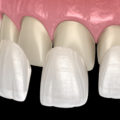
Porcelain and composite veneers are restorations placed over selected surfaces of teeth to change aspects of their visible colour, shape or proportion.
Although both may be described as dental veneers, they use different materials and involve different treatment, maintenance and cost considerations. Neither option is automatically better. Suitability depends on your oral health, bite, existing teeth, preferences and willingness to accept the associated risks and maintenance.
Before considering veneers, a dentist should assess your teeth and gums and discuss more conservative alternatives where appropriate.
What are porcelain veneers?
Porcelain veneers are thin ceramic restorations bonded to the front surfaces of selected teeth.
They are usually fabricated outside the mouth using information obtained from digital scans or impressions. Depending on the treatment plan, this may be completed by a dental laboratory or through another ceramic manufacturing process.
Treatment commonly involves:
- Examination and treatment planning
- Dental photographs
- A diagnostic design, wax-up or digital simulation
- A trial mock-up where appropriate
- Tooth preparation if required
- Digital scans or impressions
- Temporary restorations in some cases
- Assessment and bonding of the completed veneers
- Review of the bite and gum response
Some enamel may need to be removed to provide space for the ceramic and establish suitable margins. The amount varies according to the position, colour and condition of the teeth and the intended design.
Where natural tooth structure is removed, treatment is irreversible, and the tooth is likely to require an ongoing restoration.
What are composite veneers?
Composite veneers are made from tooth-coloured resin that is applied and shaped over selected tooth surfaces.
Direct composite veneers are commonly created in the mouth by the dentist. Treatment may sometimes be completed in one appointment, although larger or more complex cases may require planning, more than one visit or staged treatment.
Treatment may include:
- Selection of the planned shade
- Surface preparation where required
- Application and shaping of composite resin
- Hardening the material with a curing light
- Finishing and polishing
- Assessment of the bite
Composite veneers may require less tooth preparation than porcelain in selected circumstances, but this is not guaranteed. Enamel may still be altered, and existing composite may need to be removed or replaced in the future.
Composite treatment should therefore not automatically be described as reversible.
Porcelain and composite veneers compared
| Consideration | Porcelain veneers | Composite veneers |
| Material | Dental ceramic | Tooth-coloured composite resin |
| Fabrication | Usually made outside the mouth | Commonly applied directly to the teeth |
| Appointments | Usually requires planning and more than one treatment visit | May sometimes be completed in one visit |
| Tooth preparation | Often required, although the amount varies | May require little, some or no preparation depending on the case |
| Appearance | Can reproduce translucency, surface texture and colour characteristics | Can be shaped and colour-matched directly on the teeth |
| Staining | Generally more resistant to external staining | More likely to stain or lose surface gloss over time |
| Repair | Small defects may sometimes be repaired, but replacement may be required | Often easier to add to, polish or repair |
| Fracture | Can chip, crack or debond | Can chip, wear or detach |
| Maintenance | Requires ongoing reviews and may eventually need replacement | May require more frequent polishing, repair or replacement |
| Initial cost | Usually higher | Usually lower |
| Reversibility | Generally irreversible where teeth are prepared | Not automatically reversible, particularly where teeth are prepared |
These are general differences. Individual treatment requirements can vary considerably.
Which material looks more natural?
Both porcelain and composite can be made to resemble natural teeth, but the final appearance depends on several factors, including:
- The existing tooth colour
- The thickness of the restoration
- The number and position of teeth being treated
- The selected material
- The surface texture and polish
- The health and position of the gums
- The clinical and technical planning
- The surrounding natural teeth and restorations
Porcelain can reproduce translucency, colour variation and surface characteristics. Composite resin can also be shaped and layered to create natural-looking features, although it may be more likely to stain or lose gloss over time.
No material can guarantee a particular appearance, and an aesthetic preference remains subjective.
Which option is more stain-resistant?
Porcelain is generally less porous and more resistant to external staining than composite resin.
Composite may gradually absorb or accumulate colour from substances such as:
- Coffee and tea
- Red wine
- Tobacco
- Strongly coloured foods
- Some mouth rinses
Composite can sometimes be repolished to improve its surface. However, extensive staining or material deterioration may require repair or replacement.
Although porcelain is relatively stain-resistant, the natural teeth around it can still change colour. Whitening treatment will not alter the shade of either porcelain or composite veneers.
Which option lasts longer?
Dental restorations do not have a guaranteed lifespan.
Porcelain veneers often remain serviceable for many years, but they can chip, fracture, debond or require replacement. Composite veneers may be more likely to stain, wear or chip and may require more frequent maintenance.
Longevity is affected by:
- The condition of the underlying teeth
- The amount of remaining enamel
- The bite and forces placed on the veneers
- Teeth grinding or clenching
- Oral hygiene
- Gum health
- Diet and habits
- Trauma
- Restoration design
- Attendance for clinically appropriate dental care
A person who grinds or clenches may be advised to use a protective appliance. This can reduce some risks but cannot guarantee that the veneers will not be damaged.
Can veneers be repaired?
Composite veneers are often easier to add to or repair directly in the mouth. Minor chips, surface wear or staining may sometimes be managed by polishing or adding new composite.
A damaged porcelain veneer may sometimes be repaired with composite resin, depending on the location and extent of the damage. However, repair may be less predictable in appearance or durability, and replacement of the veneer may be required.
The appropriate approach depends on the condition of the veneer, the underlying tooth and the cause of the damage.
What do veneers cost?
Porcelain veneers generally have a higher initial cost because laboratory fabrication, ceramic materials and multiple appointments may be involved.
Composite veneers usually have a lower initial cost but may require more frequent polishing, repair or replacement. A lower initial fee does not necessarily mean a lower lifetime cost, and a higher initial fee does not guarantee a longer-lasting result.
The total cost can depend on:
- The number of teeth being treated
- The material selected
- The complexity of treatment
- Whether tooth preparation is required
- Diagnostic planning and mock-ups
- Laboratory fees
- Management of existing dental conditions
- Temporary restorations
- Reviews and maintenance
An itemised quotation should be provided after assessment. It should explain what is included and identify foreseeable future maintenance expenses where possible.
What are the risks of veneers?
Both porcelain and composite veneer treatment can involve risks and limitations, including:
- Removal of healthy tooth structure
- Tooth sensitivity
- Gum irritation or recession
- Chipping, wear or fracture
- Debonding or detachment
- Colour differences
- Changes to the bite
- Tooth decay around or beneath the restoration
- Difficulty cleaning some margins
- The possible need for root canal treatment
- An appearance that differs from expectations
- Future repair or replacement costs
Veneers do not protect teeth from decay or gum disease. The natural teeth beneath and around them still require daily brushing, interdental cleaning and appropriate professional care.
Are veneers suitable for crooked teeth?
Veneers can change the visible shape of selected teeth, but they do not move or straighten the natural teeth.
When a tooth is rotated, crowded or protruding, creating the appearance of better alignment with a veneer may require more tooth reduction. Orthodontic treatment may preserve more natural tooth structure and should be considered where tooth position is the primary concern.
In some cases, orthodontic treatment may be completed before whitening, bonding or veneers.
What are the alternatives?
Depending on the concern, alternatives may include:
- No treatment and monitoring
- Professional cleaning
- Teeth whitening
- Composite bonding to a small area
- Clear aligners or fixed braces
- Gum treatment
- Replacement of an existing failing restoration
- A dental crown where substantial restoration is clinically required
A crown covers substantially more of a tooth and generally requires more tooth reduction. It should not usually be recommended solely for appearance where a less invasive option is suitable.
How do I choose between porcelain and composite?
Relevant questions include:
- What concerns am I trying to address?
- Are my teeth and gums healthy?
- Could whitening or orthodontics be more conservative?
- How much natural tooth structure would be removed?
- Is the proposed treatment reversible?
- What result can reasonably be expected?
- How may the material change over time?
- What maintenance is likely to be required?
- What happens if a veneer chips or fails?
- What are the initial and foreseeable future costs?
- Would a trial mock-up help me understand the proposed design?
- Would a second opinion be appropriate?
You should receive enough information and time to make a considered decision before proceeding with elective treatment.
Discuss dental veneers in Perth
To discuss porcelain veneers, composite veneers and alternative treatment options, contact Smile Design Studio in Mosman Park, Perth, on (08) 9468 3322 or request a consultation online.
An individual assessment is required before treatment can be recommended.
Disclaimer: This information is general in nature and intended for adults. It is not dental advice or a substitute for an individual assessment by a registered dental practitioner. Treatment suitability, risks, costs, maintenance requirements and outcomes vary. No particular appearance or restoration lifespan can be guaranteed.