Choosing a dentist for cosmetic treatment involves more than comparing photographs, prices or online reviews.
Procedures such as veneers, crowns, orthodontic treatment and dental implants can involve irreversible changes, financial commitments and ongoing maintenance. Before proceeding, it is important to check the practitioner’s registration, understand their relevant training and experience and carefully review the proposed treatment, risks and alternatives.
The appropriate practitioner will depend on your oral health, the treatment being considered and the complexity of your circumstances.
Is “cosmetic dentist” a recognized specialist title?
“Cosmetic dentist” is a general descriptive term. It is not a recognized dental specialist title in Australia.
Registered dentists may provide cosmetic dental procedures when the treatment falls within their education, training, experience and competence. The scope and depth of this experience can vary between practitioners.
Recognized dental specialties in Australia include:
- Prosthodontics
- Orthodontics
- Periodontics
- Endodontics
- Oral surgery
- Oral and maxillofacial surgery
- Pediatric dentistry
- Special needs dentistry
- Oral medicine
- Oral pathology
- Dento-maxillofacial radiology
- Public health dentistry
- Forensic odontology
A dentist should only describe themselves as a specialist or use a protected specialist title if they hold the relevant specialist registration.
For complex treatment, a general dentist may recommend assessment or treatment by a registered dental specialist. A willingness to refer when appropriate can be an important part of responsible care.
Check the dentist’s registration
The first step is to confirm that the practitioner is registered with the Dental Board of Australia.
You can search the Ahpra Register of Practitioners using the dentist’s name. The register shows their:
- Registration status
- Dental practitioner division
- Specialist registration, if applicable
- Conditions or undertakings that are publicly recorded
- Principal place of practice
Ahpra’s online register is the authoritative source for current registration information. Membership of a professional organisation, a website profile or a printed certificate does not replace checking the public register.
Ask about relevant training and experience
Registration as a dentist does not mean that every practitioner has identical experience with every cosmetic procedure.
Consider asking:
- What training have you completed in this treatment?
- How frequently do you provide this procedure?
- How long have you been providing it?
- What types of cases do you commonly manage?
- Is my case similar to the cases you usually treat?
- Will any part of my treatment be completed by another practitioner?
- Is specialist input appropriate?
- What complications have you encountered, and how are they managed?
The aim is not to find a practitioner who claims never to have experienced a complication. Complications can occur in healthcare. A useful discussion should explain how risks are reduced, recognized and managed.
Look for an examination before recommendations
A cosmetic consultation should involve more than discussing tooth color or selecting a photograph.
Before recommending treatment, a dentist may need to assess:
- The teeth and existing restorations
- Tooth decay
- Gum health
- Tooth wear
- Cracks or structural weakness
- The bite and jaw movement
- Oral hygiene
- Missing teeth
- Relevant medical conditions and medications
- Grinding or clenching
- Previous dental treatment
Dental photographs, X-rays, scans or other records may be indicated depending on the proposed treatment.
Be cautious if irreversible treatment is recommended without an appropriate clinical examination or consideration of underlying dental conditions.
Expect more than one treatment option
A responsible treatment discussion should include reasonable alternatives, including the option of no treatment.
For example:
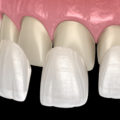
- Whitening may be considered before veneers when tooth color is the main concern.
- Orthodontic treatment may be more conservative than veneers when tooth position is the primary concern.
- Limited composite bonding may preserve more natural tooth structure than full coverage.
- A damaged tooth may require restorative treatment rather than a procedure chosen only for appearance.
- A missing tooth may be managed with an implant, bridge, removable prosthesis, orthodontic space closure or monitoring.
- Healthy natural variation may not require treatment.
More treatment is not necessarily better. Ask why each procedure is being recommended and whether a less invasive option could address the same concern.
Ask how much natural tooth structure will be removed
This is particularly important when considering veneers and crowns.
Questions may include:
- Will enamel need to be removed?
- Approximately where and why is preparation required?
- Could the treatment be completed with less preparation?
- What happens to the tooth if the restoration is removed?
- Will the tooth require restorations for the rest of its life?
- Could orthodontics or bonding preserve more natural tooth structure?
- What is the risk of sensitivity or root canal treatment?
Porcelain veneer and crown treatment is generally irreversible where natural tooth structure is removed. Composite bonding may involve less preparation in selected cases, but it should not automatically be described as reversible.
Request a written treatment plan
Before proceeding, you should receive a written plan that explains:
- The diagnosis or clinical findings
- Your stated treatment goals
- The proposed procedures
- Which teeth are involved
- The recommended treatment sequence
- Alternative options
- Important risks and limitations
- Estimated treatment time
- The materials proposed
- Maintenance requirements
- The total anticipated cost
Complex cases may change as further information becomes available. If so, the reasons for changing the plan and any additional costs should be discussed before further treatment proceeds.
Understand the risks and limitations
Cosmetic and restorative procedures can involve complications.
Depending on the treatment, these may include:
- Tooth sensitivity
- Removal of healthy tooth structure
- Gum irritation or recession
- Chipping, staining, wear or fracture
- Changes to the bite
- Tooth decay around restorations
- Color differences
- Debonding or failure of a restoration
- Infection or delayed healing
- The possible need for root canal treatment
- Implant complications
- Future repair or replacement
- An appearance that differs from expectations
Be cautious of claims that treatment is painless, risk-free, permanent or guaranteed. Outcomes, comfort, recovery and restoration longevity vary between individuals.
Consider the quality of communication
A consultation should allow you to ask questions and express your preferences without pressure.
The dentist should be prepared to explain:
- What they have identified
- Why treatment is or is not being recommended
- What treatment can reasonably change
- What it cannot change
- The risks and limitations
- More conservative alternatives
- Maintenance requirements
- What happens if you decide not to proceed
You should not feel pressured to make an immediate decision about elective treatment. Taking time to consider the plan or seek another opinion is reasonable.
How should before-and-after photographs be assessed?
Photographs of previous cases may help illustrate the practitioner’s treatment approach. However, they cannot predict your individual outcome.
When reviewing images, consider asking:
- Are these patients treated by this dentist?
- What procedures were performed?
- How long after treatment was the photograph taken?
- Were the photography conditions consistent?
- Have the images been filtered, retouched or enhanced?
- Is the case clinically comparable to mine?
- Are the risks and limitations also explained?
Lighting, camera angle, facial expression, moisture, makeup and image processing can substantially affect the apparent result.
Photographs should be presented with patient consent and should not be altered in a way that misrepresents treatment outcomes. The result experienced by one patient does not indicate what another patient will experience.
Do online reviews help?
Reviews may provide information about administrative matters, communication or the general patient experience. However, they do not establish that a treatment is clinically appropriate or predict your outcome.
Reviews can be incomplete, selectively displayed or written by people whose circumstances differ from yours. Positive statements about clinical treatment should not be used by a practice as testimonials in advertising regulated health services.
Registration, clinical assessment, informed consent and a clear treatment plan are more important than star ratings alone.
Is newer technology always better?
Digital scanners, dental photography, computer-assisted design, three-dimensional imaging and trial mock-ups can assist with diagnosis, planning and communication.
However, owning particular technology does not establish that a practitioner is more skilled or that treatment will be successful. Technology should be used when it is clinically appropriate and interpreted by a suitably trained practitioner.
Ask how a particular tool will contribute to your diagnosis or treatment rather than assuming that newer equipment automatically produces a better outcome.
Ask who makes the restorations
If porcelain veneers, crowns or implant restorations are proposed, you may wish to ask:
- Where will the restorations be made?
- What material is being recommended?
- Why is that material suitable?
- Who is responsible for the design?
- Will I have an opportunity to review the proposed shape and colour?
- Is a temporary or trial stage planned?
- What happens if a restoration does not fit or meet the agreed design?
The dentist remains responsible for assessing the restoration clinically and determining whether it is appropriate to bond or fit.
Review the quotation and financial arrangements
An itemised quotation should explain what is and is not included.
Check whether the quoted fee covers:
- Consultations and diagnostic records
- Mock-ups or trial restorations
- Tooth preparation
- Temporary restorations
- Laboratory fees
- Final restorations
- Review appointments
- Protective appliances where recommended
- Repairs or adjustments
- Sedation or anaesthetic services
- Future maintenance
If finance or a payment plan is offered, review the interest, fees, repayment period and total amount payable. Financial arrangements should not be used to pressure you into treatment.
“Affordable” is subjective. Consider both the initial fee and the possibility of future repair or replacement.
Ask about aftercare and complications
Before treatment, find out:
- Who will provide follow-up care?
- What symptoms require urgent contact?
- What happens if a veneer chips or debonds?
- How are bite concerns managed?
- What costs apply to repairs or replacements?
- Is any written warranty offered?
- What conditions apply to that warranty?
- What maintenance appointments may be clinically appropriate?
- What happens if the dentist leaves the practice?
A warranty is a commercial arrangement. It does not guarantee that a biological tooth or restoration will remain free from complications.
Warning signs to consider
Exercise caution if advertising or a consultation:
- Guarantees a particular appearance or outcome
- Describes treatment as permanent, painless or risk-free
- Promises confidence, happiness or social success
- Uses urgency or a limited-time offer to pressure a decision
- Recommends extensive treatment without a clinical examination
- Does not discuss no-treatment or conservative alternatives
- Minimises removal of healthy tooth structure
- Avoids explaining complications
- Gives only a verbal estimate rather than an itemised quotation
- Relies heavily on unverified reviews or edited images
- Discourages you from seeking a second opinion
- Suggests that one treatment is suitable for everyone
No single factor automatically means that care is inappropriate, but these signs warrant further questions.
When might a specialist opinion be useful?
Depending on the case, referral may be appropriate to a registered:
- Prosthodontist for complex restorative or prosthetic treatment
- Orthodontist for complex tooth movement or bite concerns
- Periodontist for advanced gum or supporting-tissue treatment
- Endodontist for complex root canal assessment
- Oral surgeon or oral and maxillofacial surgeon for selected surgical treatment
Multidisciplinary care does not necessarily mean every patient needs several practitioners. The need for referral depends on the diagnosis and complexity of treatment.
A checklist for your consultation
Before making a decision, ask:
- Is the dentist registered?
- Is “specialist” registration claimed, and can it be verified?
- What relevant training and experience does the dentist have?
- Has my oral health been properly assessed?
- What problem is each procedure intended to address?
- What happens if I choose no treatment?
- Are there less invasive alternatives?
- How much natural tooth structure will be removed?
- What are the risks in my circumstances?
- What maintenance will be required?
- What is included in the quotation?
- Can I take time to consider the plan?
- Would a second opinion be appropriate?
Discuss cosmetic dental treatment in Perth
At Smile Design Studio, cosmetic and restorative options are considered following an individual assessment and discussion of the proposed benefits, risks, limitations, alternatives and costs.
To request a consultation with Smile Design Studio in Mosman Park, Perth, call (08) 9468 3322 or contact the practice online.
Disclaimer: This information is general in nature and intended for adults. It is not dental advice or a substitute for an individual consultation with a registered dental practitioner. Treatment suitability, risks, costs, maintenance and outcomes vary. No particular appearance, restoration lifespan or emotional outcome can be guaranteed.