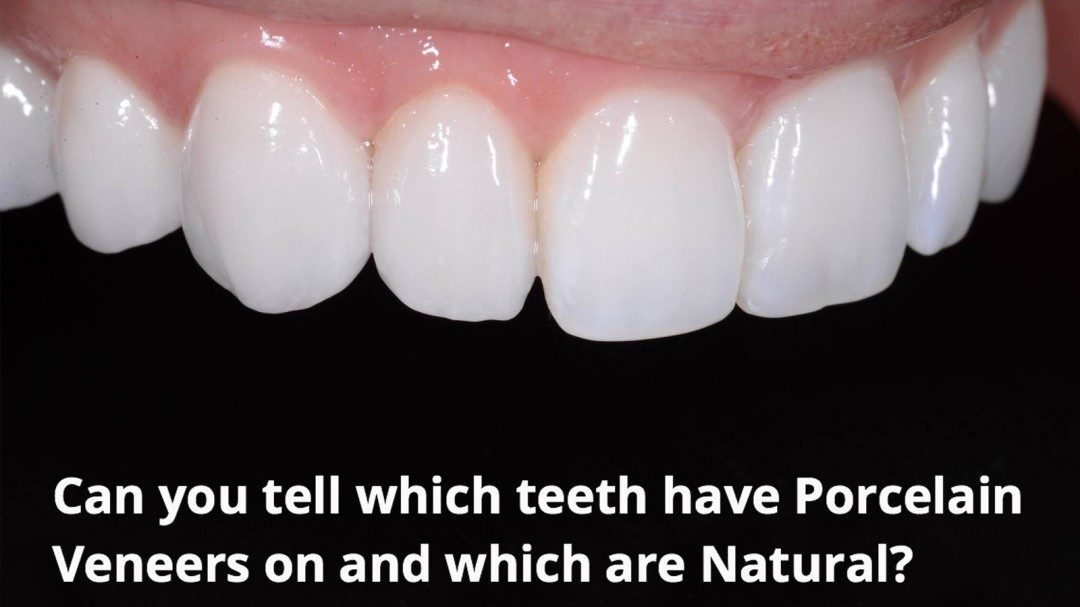
What Are Porcelain Veneers?
Porcelain veneers are thin “wafers” of porcelain that sit over your teeth. They are custom made to fit each tooth precisely so that they fit seamlessly on each tooth without an “edge.”
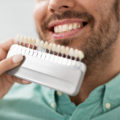
They have all the characteristics of a tooth, from color graduations, natural textures, white spots, translucency, and whatever character you want in a tooth. You choose the color that you want your tooth to be and this is permanent. The porcelain does not discolor over time. They let light through so do not appear opaque, but very natural like a natural, unrestored tooth.
What Can Porcelain Veneers Do For Your Smile?
- Build up worn down teeth so they are longer again.
- Make crooked teeth appear straight
- They can change the shape size, proportions of teeth
- They can close gaps
- They can build up broken teeth.
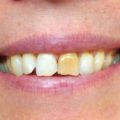
- They can make teeth white permanently.
- Build out narrow smiles
- Make gummy smiles less gummy with laser gum lifting
What Is Involved In Getting Porcelain Veneers ?
For you, the patient :
 Pick your dream smile. Let us know what you want, what your goals are, and we will help you achieve what you want. We will sit with you and design your smile with you so you get what you want in the end.
- View the Mock ups that we prepare for you so you can see the result before we even begin. We will get the mock ups as close to what you envisage as your dream smile before we even begin so you have a good idea what you will look like before you even start.
- TREATMENT VISIT 1 Interim smile. When you come in for the first visit, we will prepare the teeth for veneers and place the mock ups as your interim or temporary smile so that you get a chance to see the what the “finals” will look like and have a really good idea if it fulfills your goals. At this stage your smile is still in an acrylic stage so we can modify or change anything you want.
- TREATMENT VISIT 2 Final smile goes in.
The process is very simple for the patient, in just 2 treatment visits you can have a new smile, and if you want you can use our brand new Nucalm Natural Anxiety-Free system or have traditional sedation, you can be totally relaxed during treatment.
Much planning and preparation by dentist and laboratories occur outside the treatment plan. We execute each of our smiles according to a very detailed systematized protocol, which have been developed by our very own Dr. Vicky Ho after years of experience. This ensures that when it comes to our patients we do most of the work in planning and preparation, which means that when it comes down to treatment of the patients, it occurs seamlessly, like clockwork, and very quickly with “no fiddling about” for the patient.
The system by which we create your smile is illustrated below. It is not a simple process and a lot goes on behind the scenes however we make it simple for you, the patient.
Why Our Dental Practice Only Selects The Best Partners
We only choose to work with the world’s most skilled artisans who have all received training in the specialized field of cosmetic dentistry in America. Without this partnership the product that we get will be less than satisfying as our lab partners must be able to produce precisely what we design. Our lab partners are award winners in their field.
They also use specialized equipment to ensure that we have the best colour match to blend to the natural teeth.
What Do Porcelain Veneers Cost?
They range in cost depending on which laboratory you choose, from $1850 to $2530 per tooth. How many teeth you choose to do depends on what you need to achieve. We will go through and help you design what you need to achieve the result you want.
How Long Do Porcelain Veneers Last?
 Whilst Porcelain veneers are very long lasting and as strong as enamel, there are factors in the mouth that can break them down. What broke your teeth down in the first place can also damage porcelain veneers. Whilst you can use them like normal teeth and eat whatever you want, things like bottles, olive seeds, hard popcorn, biting into a fork, etc things that would chip your natural teeth will also chip porcelain. If you have worn your natural teeth down by grinding and clenching and that is not rectified you would probably do the same with the porcelain veneers.
So in other words, how long they last depends on the the conditions you put it through. We will diagnose all the pre-existing conditions in your mouth and help you to devise an after care plan to ensure you have the best life out of your investment for the long term.
We have a 5 year warranty on the veneers provided that you follow all the care directions and protocols we advise.
For more information, you can visit our website on www.smiledesignstudio.com.au or register now for our free information pack.
Our free Information package that will give you tips on :
- The 11 Questions you should ask your dentist before you decide on getting your smile done
- The failsafe way of ensuring you get what you want in a smile
- How are smiles created in 2 visits
- A tour behind the scenes of how your smile is created
- How do I know what smile suits me?
- The advanced Dental artistry solution. Case studies that show step by step how we turned Scott and Lisa from Drab to Fab
- Most common questions we get asked ANSWERED.
- Most effective way to get long lasting White teeth without the sensitivity
- How do you fix crooked teeth without years in braces?
- How to get a whole new set of teeth (you don’t have to put in a glass at night) in 2 days.
- NUCALM The new Natural way to sedation, drug free and no side effects. Be one of the first in Australia to experience treatment anxiety free, the NUCALM way.
- Could it be possible? A dental non-surgical facelift? Well you be the judge!
- Headache sufferer? Constant neck stiffness or soreness? Worn down teeth? Grind and clench? What a bad bite can do for your face, muscles joints and more.
Dr Vicky Ho is among the leading dentists in the world in Cosmetic, implant and TMJ dentistry. She has received qualifications from around the world’s top institutions, including the Las Vegas Institute of Advanced Dentistry, Occlusion connections with Dr. Clayton Chan, the world’s authority in TMJ dysfunction and neuromuscular dentistry, as well as finishing her masters clinician course with gIDE Implant Dentistry in Loma Linda University and UCLA in California. She strives to continually better herself every day in her skills and knowledge in a quest for constant and never ending improvement to be able to provide her patients with the best care possible with latest techniques, materials and technology.
For more information about our Cosmetic Dentistry in Mosman Park, Perth, call (08) 9468 3322 for a Free Smile Assessment.